The Eli-Chem Glow in the Dark range of pigments glow well once activated by light, indoors or sunlight. But how does it look when applied to other colours?
In the instructions, Eli-Chem states that the Glow in the Dark pigments should be mixed with a clear/transparent or light coloured binder (e.g. resin). This allows the light through to activate the crystals that glow in the dark.
So how do we achieve the best effect?
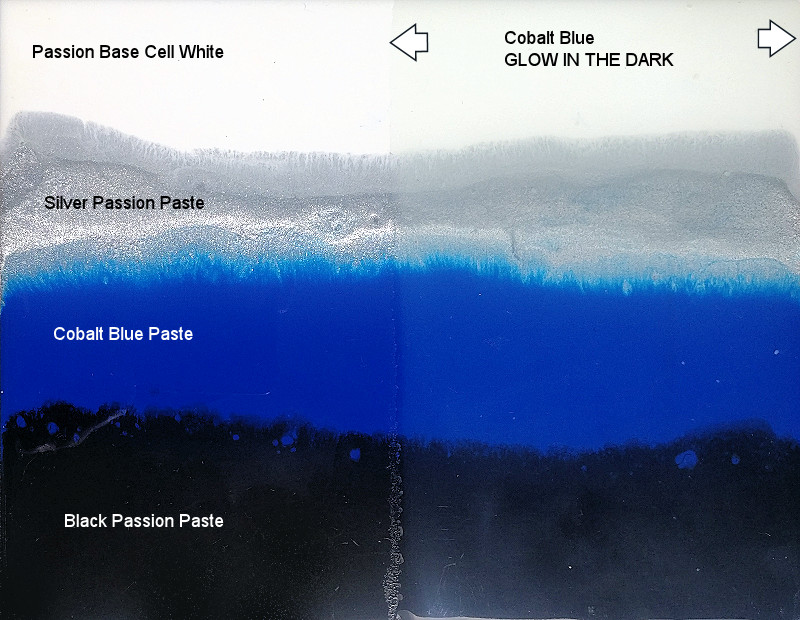
The pigments are best applied to a white or light background. The panel below was first coated with white, silver sheen, cobalt blue and black resin to create the striped background. Once cured, the RIGHT half of the panel was coated (a pour) with Eli-chem Cobalt Blue Glow in the Dark, mixed with clear epoxy resin (MasterCast 121) (Fig. 1). In this experiment, 12% power (by weight) was mixed with the resin, as the recommendation is 10% to 15% powder, and poured at a temperature of around 25oC, forming a final cured layer of 1.7mm on the coloured resin panel. It is important to mix the pigment thoroughly, so no clumps of powder form. The image of the panel in the dark (Fig. 2) is shown on the right.
The white background definitely glows more in the dark, but there is still a good glow on the silver and even the cobalt blue background. There is some glow on the black, which is not clear in the photo, as it is a bit tricky to photograph in the dark. The panel also glows when the room is only slightly darkened, creating an interesting effect and subtle glowing highlights.
 |
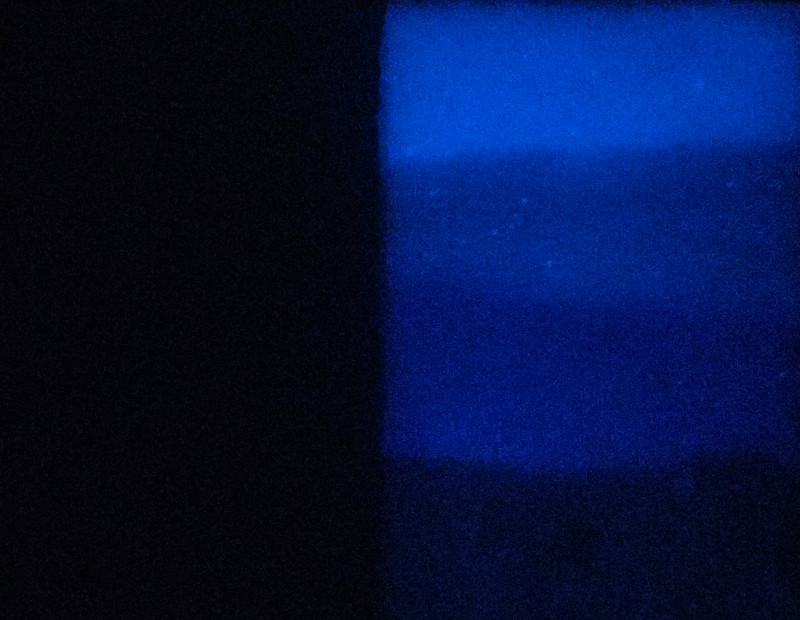 |
| Figure 1. Resin panel with right half coated with Glow in the Dark layer. Light reflected at bottom of the image. The two white dots on the blue are unmixed pigments. | Figure 2. At night: right half coated in Glow in the Dark layer. |
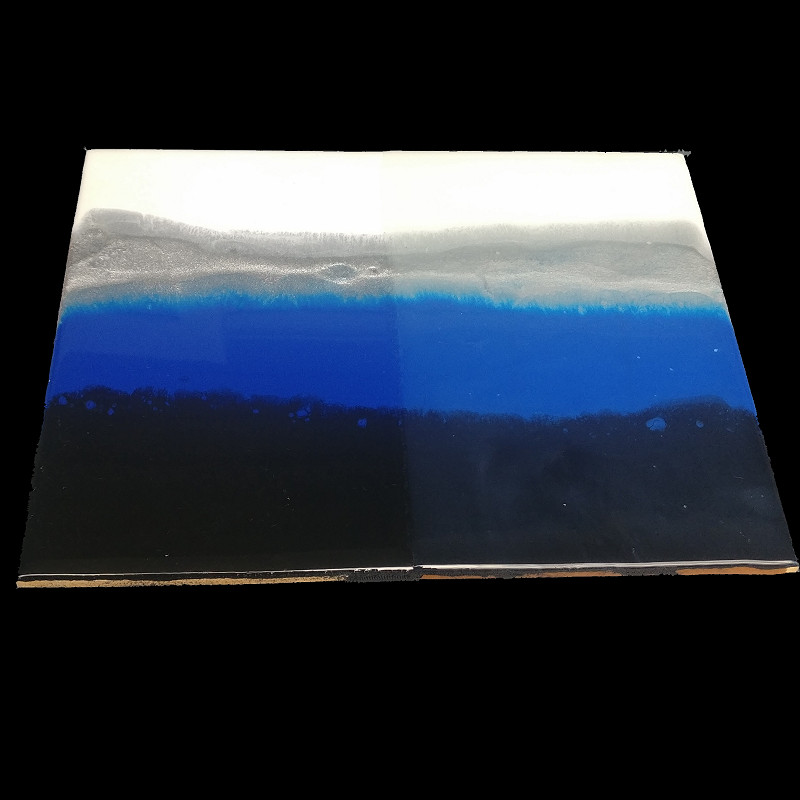
The Glow in the Dark pigment does add a very slightly opaque layer and reduces the sheen when the background has a shimmer (e.g. Silver paste) (Fig. 1). When the coloured panel is viewed at an angle (Fig. 3), it illustrates the slight differences in reflective surfaces of the normal shiny resin section (left) and the shiny Glow in the Dark (right) layer.
How transparent is the mixed Glow in the Dark resin?
The colour of the mixed Glow in the Dark pigmented layer is best demonstrated with a splash of Glow in the Dark resin on a white page with black text (Fig. 4). When examined with a light from below, the tiny active crystals can be seen as little specs.
 |
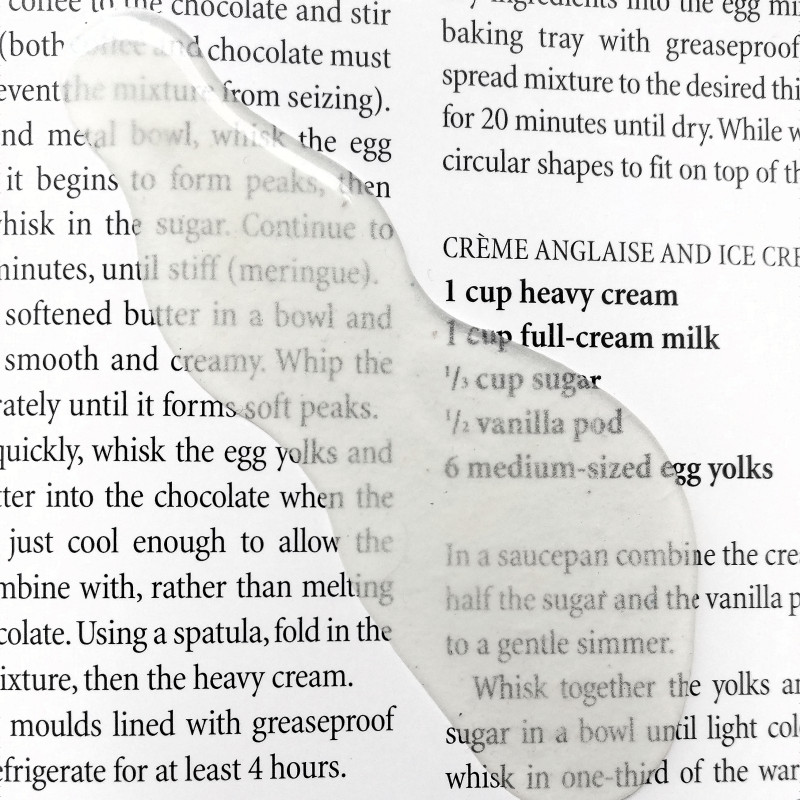 |
| Figure 3. Coloured panel at an angle. | Figure 4. Glow in the Dark pigment in clear resin. |
The pigment is ideal to add a new, interesting design to a wall art panel or moulded piece. Imagine a bangle or pendant glowing in the dark. Figures 5 and 6 show a Christmas tree decoration cast with Glow in the Dark (Cobalt Blue), the back has a thin layer of clear resin with star glitters (seen on the bell bit at the bottom) and the reindeer is filled with Michele Shimmer Paste coloured resin with a few shiny flakes.
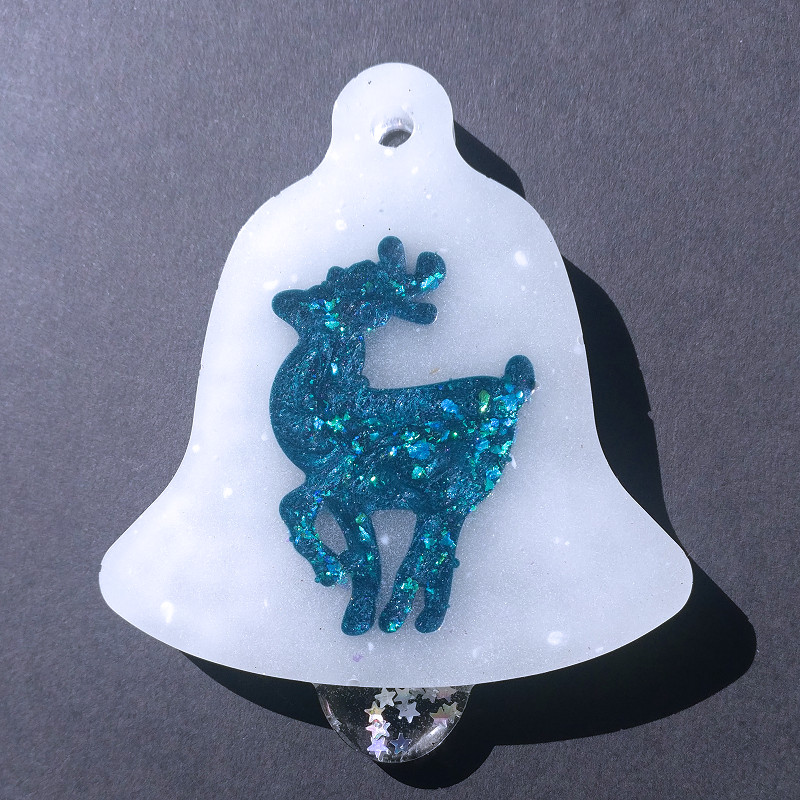 |
 |
| Figure 5. Glow in the Dark Christmas trinket. | Figure 6. Christmas trinket at night. |
The Gallery shows more Glow in the Dark pieces created by our customers.
Definitely a pigment to have some fun with!
By Philip Coetzee Ph.D.
Oct 2021