• Skip to main content
  • Skip to primary sidebar
  • Skip to footer

Resin and more

  • Home
  • Shop
    • Resin
      • Shop Resin
      • Starter Kits
      • Which Resin?
      • Resin FAQs
    • Resin Calculator
    • Acrylic Resin (Water-based )
      • Aqua Cast
      • Ecrylimer Composites
      • Water Based Colour Pigment
      • Workshops
    • Acrylic Resin Calculator
    • Pigment Pastes (all)
    • Pigment Powders (all)
      • Fine Pigment Powders
      • Glow in the Dark
    • Colour Kits
    • Fluro Colours
    • Glitters & Flakes
      • Metallic Foil Flakes
      • Passion Glitter
      • R&M Glitters
      • R&M Metal Glitters
    • Water Based Colour Pigment
    • Resin Tints
    • Acrylic Inks / Tints
    • Moulds & Tools
      • Beakers, Tools & more
      • Bookmarks
      • Candle Holders
      • Christmas Decor
      • Coasters
      • Decorations
      • Handles & Blades
      • Jewellery-Keychains
      • Bowls, Dishes & Trays
      • Deep Moulds
      • Mould FAQs
    • resi-BLAST Dispersion Media
      • resiBLAST FAQs
    • Crackle Paste
    • Art Boards
    • Wood Treatment
    • Workshops by Resinworx
  • Cart
    • My account
    • Checkout
    • Customer Care
  • Workshops
    • Workshops Overview
    • Workshops by RESINWORX
  • Gift Card
    • Gift Card Balance
  • Videos
    • Using Passion Top Cell White
    • Using Passion Base Cell White
    • Using Colour Passion Interference Colours
    • Crackle Paste XL Application
    • Using Hi-Build Resin for edges
    • Colour Passion YouTube Videos
  • FAQs
    • Resin FAQs
    • resiBLAST FAQs
    • Ecrylimer FAQs
    • Colour FAQs
    • Mould FAQs
  • Gallery
  • Blog
    • Tips and Articles
  • Contact
    • About

webbuilderram

Glow in the Dark fun

October 10, 2021 by webbuilderram

The Eli-Chem Glow in the Dark range of pigments glow well once activated by light, indoors or sunlight. But how does it look when applied to other colours?

In the instructions, Eli-Chem states that the Glow in the Dark pigments should be mixed with a clear/transparent or light coloured binder (e.g. resin). This allows the light through to activate the crystals that glow in the dark.

So how do we achieve the best effect?

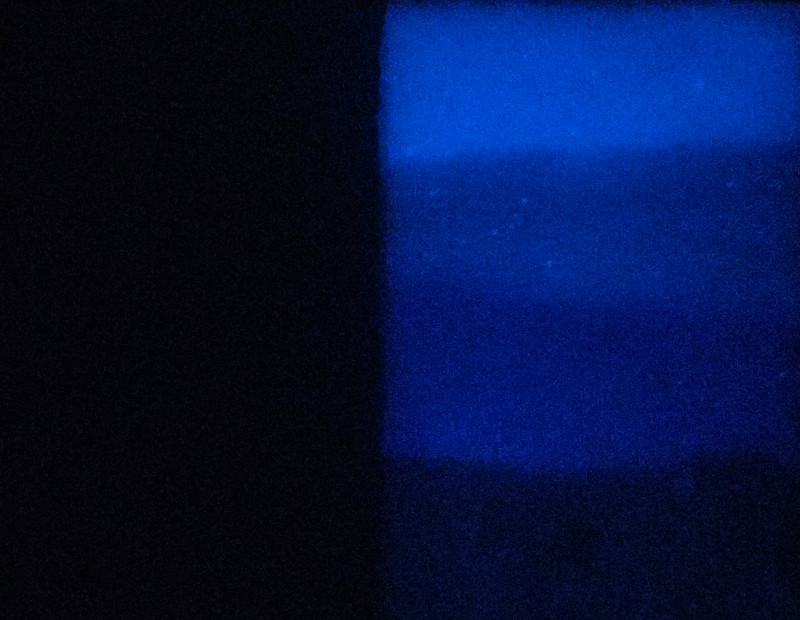
The pigments are best applied to a white or light background. The panel below was first coated with white, silver sheen, cobalt blue and black resin to create the striped background. Once cured, the RIGHT half of the panel was coated (a pour) with Eli-chem Cobalt Blue Glow in the Dark, mixed with clear epoxy resin (MasterCast 121) (Fig. 1).   In this experiment, 12% power (by weight) was mixed with the resin, as the recommendation is 10% to 15% powder, and poured at a temperature of around 25oC, forming a final cured layer of 1.7mm on the coloured resin panel. It is important to mix the pigment thoroughly, so no clumps of powder form. The image of the panel in the dark (Fig. 2) is shown on the right.

The white background definitely glows more in the dark, but there is still a good glow on the silver and even the cobalt blue background. There is some glow on the black, which is not clear in the photo, as it is a bit tricky to photograph in the dark. The panel also glows when the room is only slightly darkened, creating an interesting effect and subtle glowing highlights.
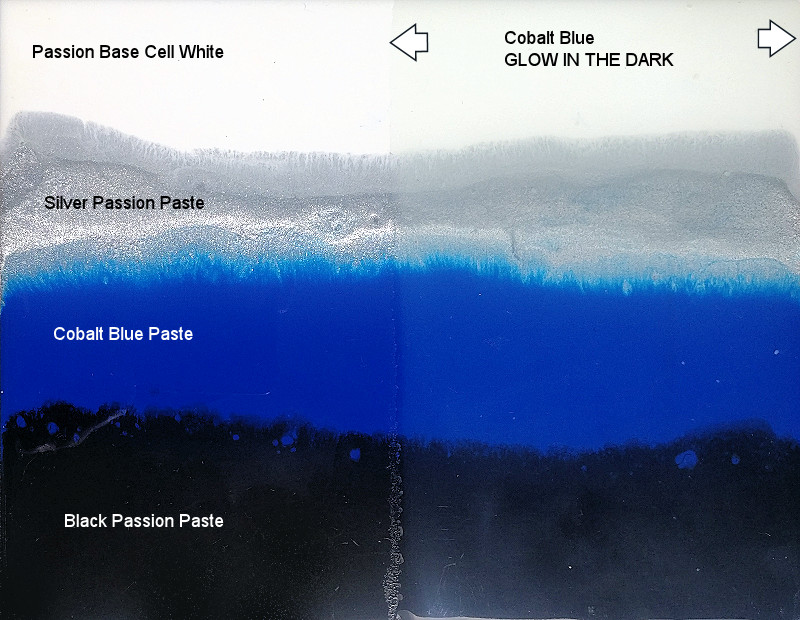
Resin panel with right half coated with Glow in the Dark layer At night: right half coated with Glow in the Dark layer
Figure 1. Resin panel with right half coated with Glow in the Dark layer. Light reflected at bottom of the image. The two white dots on the blue are unmixed pigments. Figure 2. At night: right half coated in Glow in the Dark layer.

The Glow in the Dark pigment does add a very slightly opaque layer and reduces the sheen when the background has a shimmer (e.g. Silver paste) (Fig. 1). When the coloured panel is viewed at an angle (Fig. 3), it illustrates the slight differences in reflective surfaces of the normal shiny resin section (left) and the shiny Glow in the Dark (right) layer.

How transparent is the mixed Glow in the Dark resin?

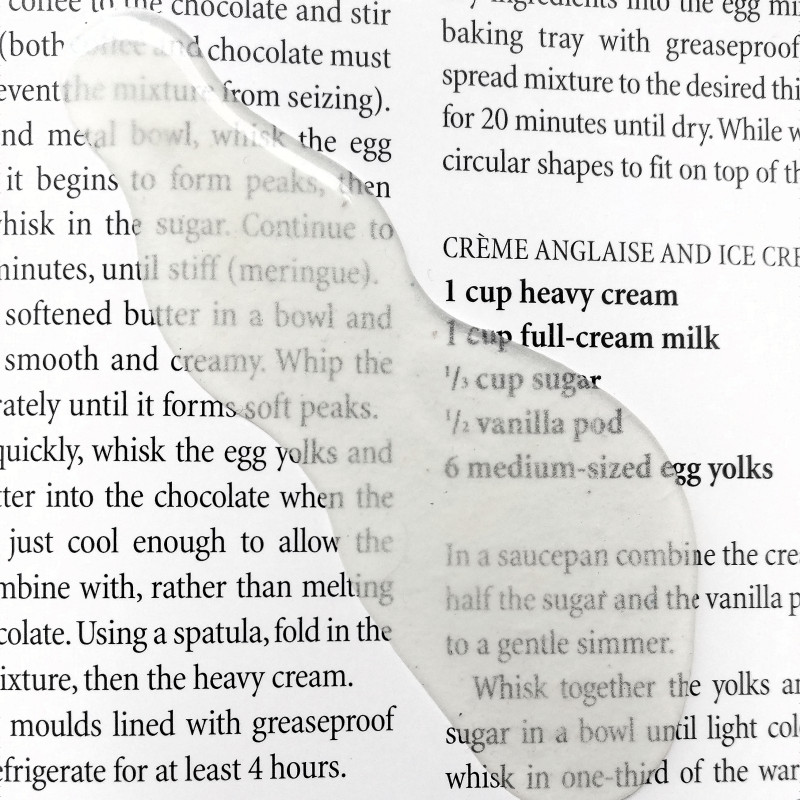
The colour of the mixed Glow in the Dark pigmented layer is best demonstrated with a splash of Glow in the Dark resin on a white page with black text (Fig. 4). When examined with a light from below, the tiny active crystals can be seen as little specs.
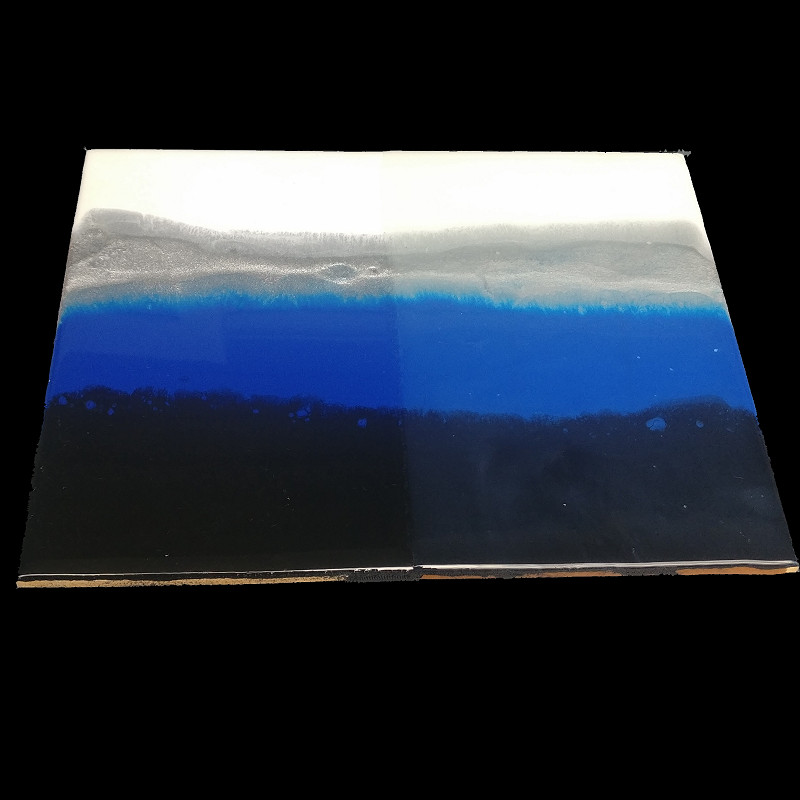
Coloured panel photographed at an angle. Glow in the Dark pigment in clear resin.
Figure 3. Coloured panel at an angle. Figure 4. Glow in the Dark pigment in clear resin.

The pigment is ideal to add a new, interesting design to a wall art panel or moulded piece. Imagine a bangle or pendant glowing in the dark. Figures 5 and 6 show a Christmas tree decoration cast with Glow in the Dark (Cobalt Blue), the back has a thin layer of clear resin with star glitters (seen on the bell bit at the bottom) and the reindeer is filled with Michele Shimmer Paste coloured resin with a few shiny flakes.
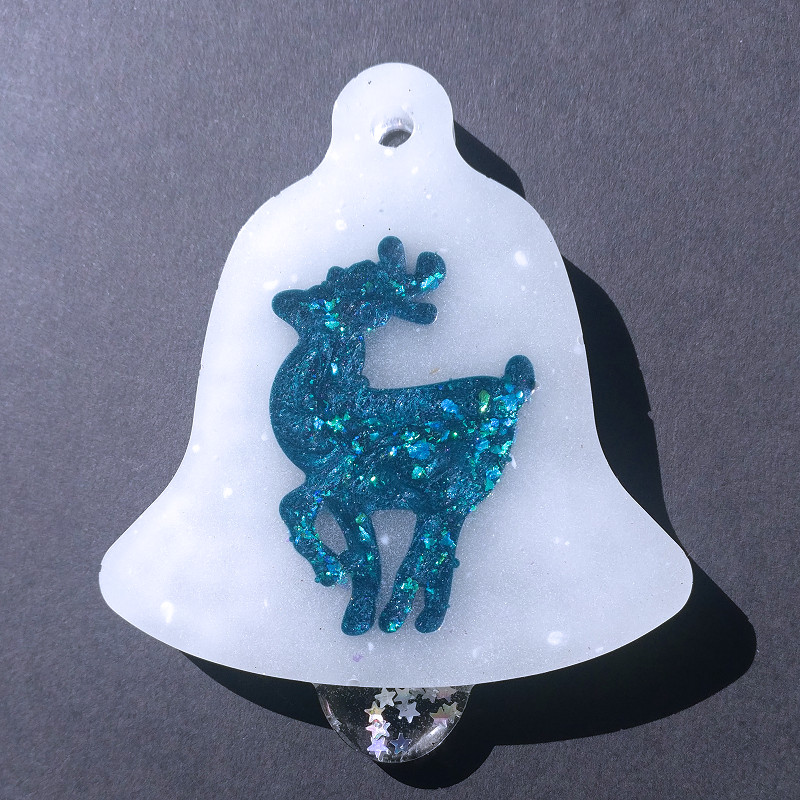
Figure 5. Glow in the Dark Christmas trinket Figure 6. Glow in the Dark Christmas trinket at night.
Figure 5. Glow in the Dark Christmas trinket. Figure 6. Christmas trinket at night.

The Gallery shows more Glow in the Dark pieces created by our customers.
Definitely a pigment to have some fun with!


By Philip Coetzee
Ph.D.
Oct 2021
Filed Under: Tips & Articles

Are Epoxy Resins Safe?

July 19, 2021 by webbuilderram

Epoxy resins are used in many application, from art to the industrial sector (1).

Epoxies (and its Bisphenol components e.g. BPA) are used in almost every part of our daily life, automotive and marine coatings, water pipes, flooring, paints, electronics, lining tins for tinned foods (2,3), and even some thermal-paper receipts we stick in our pocket when out shopping (4,5,6).

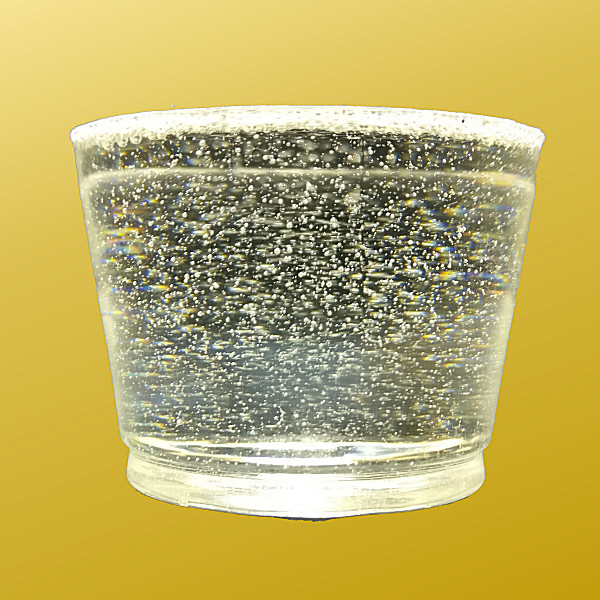
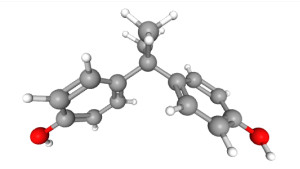
Bisphenol A (BPA) epoxy resinWith all this BPA around, should we be worried?
No need to go shopping in full PPE gear, or wear it when eating a tin of baked beans on the freshly painted bonnet of your car! Just be aware and take care, especially when using the uncured materials. All resins and hardeners show warnings and recommend safety gear when working with the raw materials. More will be explained on Food Safe Epoxy Resin and applications in a future article.

… For Key Points and Quick Read, see the end of the article…

The first epoxies were created by two scientists, Dr Pierre Castan and Dr Sylvan Greenlee in the 1930, used for dental fixtures (1,2) and later became widely used as adhesives. Most epoxies resins are industrially produced petroleum derivatives and most commonly created with Bisphenol A and epichlorohydrin (1). Bisphenol A (BPA) has been around for a long time, first synthesized by a Russian chemist in 1891 (7) and only much later, in the 1950s revolutionized the plastic industry. The BPA (resin) is mixed with a hardener chemical (most often polyamines, aminoamides or phenolic compounds), which reacts and bonds it into a network (the “curing process”) with strong mechanical properties (1). This cured product is often called epoxy resin or just epoxy (although the actual epoxy resin is really the liquid part). And if you want to see how the chemistry works, see the lovely simplified article of “Making Epoxy Resin“.

:: What are the risks?

“Cured epoxy resins do not pose any risk to human health when handled in a professional manner and following the necessary safety measures.” Quote from Epoxy Resin Committee, Europe (1)

The risk of handling epoxies is via skin contact, when mixing and handling the two components, epoxy resin and hardener. Material safety data sheets should always be available and note the warnings on the containers. Epoxies can be handeled safely when taking these precautions (1).

:: Why the fuss about BPA?

Leached Bisphenol A (BPA) was discovered to have weak estrogenic hormone-like properties (3) in the early 1990s (7,5) thus having hormonal active effects when ingested or absorbed. It has been associated with numerous diseases in humans (8) and other living organisms, as discovered  since then. Many countries have banned BPA (or associated components) in baby products, especially bottles, as the minute amount of BPA leaching out when a baby bottle or drinking cup is warmed in a microwave, could possibly affect the developing hormonal systems of babies (7,3). Small amounts of BPA leached from food or beverage containers are often ingested by all of us, daily (5).

Of all the BPA produced in the world, more than 99% is converted into polymers, mainly epoxy resins and polycarbons (8).  Of this, about 20% is used as a component in epoxy resin (5). “Several high quality migration studies on BPA, which included daily use conditions such as heating, microwaving, machine-dishwashing, rinsing, sterilizing, have repeatedly shown that migration from BPA-based polycarbonate is very low and far below the safety levels set by the authorities. It does not pose a health risk to the consumer under normal handling and use of the products.” Quote from Bisphenol, PC/BPA Group of the industry association PlasticsEurope (8).

The debate on the actual effect of BPA on humans continues. A comprehensive scientific evaluation done by the European Food Safety Authority (EFSA) in 2015 concluded that “scientific knowledge of how BPA behaves in humans was still unclear and there was no single explanation for how BPA potentially affects humans. Therefore, based on the WHO criteria, it was not considered possible to conclude that BPA is an endocrine disruptor”(9). These ideas are constantly challenged. No safety limits have been set for BPA in New Zealand. Safety limits are levels of dietary exposure that are without appreciable risk for a lifetime of exposure (3).

For more on risks, view the Risk Factsheet by the European Food Safety Authority (EFSA) and New Zealand Food Safety Authority’s Bisphenol A – Information Sheet.

:: What about alternatives for BPA?

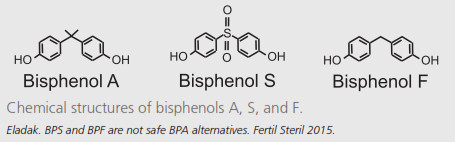
Many alternative chemical compounds have been proposed and is currently in use in epoxy resins, for example* Bisphenol F (BPF) and Bisphenol S (BPS) (5). Both these have been claimed to be safe. Although initially thought to be safe alternatives to BPA, more recent research is showing this not to be the case and the alternatives BPF and BPS can have the same toxic outcomes (5,10). For example, prenatal BPF exposure is associated with decreased cognitive function in children at 7 years, with significant associations in boys (11). BPA substitutes such as BPS and BPF have similiar structures to Bisphenol A and appear to have similiar potencies and actions. BPA substitute-based products (e.g. some epoxy resins used in art) are advertised under the guise of “BPA-free.” This term gives the impression that the products are safe when it is not (12). Most literature has been focussed on BPA and its only now that the new kids on the block, BPF and BPS, are being researched more comprehensively that we are finding them to have the same or similiar toxic effects (10,12).

Bisphenol A, BPS, BPF
BPA, BPS and BPF – see similarities in structure

:: But there is more…

The BPA used in most epoxy resins is a bit different!
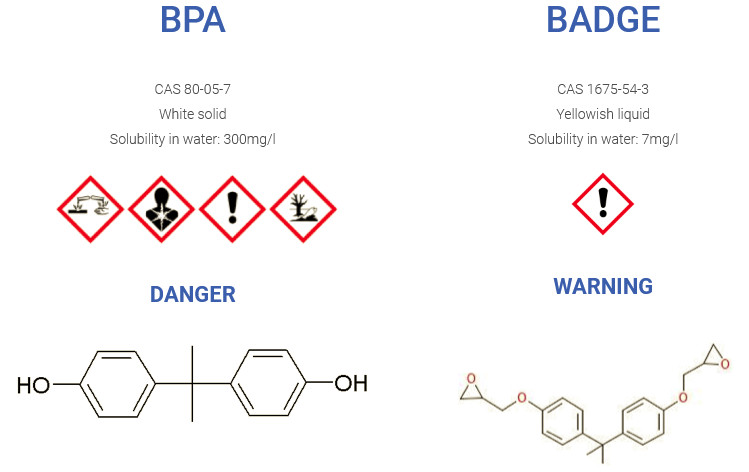
BPA is most often combined with another chemical, epichlorhydrin, creating Bisphenol A diglycidyl ether (also known as BADGE) which is a completely different molecule with its own unique properties, and not just a mix of BPA + epichlorohydrin. It is less harmful than pure BPA as shown by the warning icons in the schematic below, and 42 times less soluble in water (2).

BPA versus BADGE epoxy resin

:: But my resin SDS does not state BPA or Bisphenol?

Are you sure?
Any chemical substance can have many different synonyms, and the way it is described can be very confusing. Basically, all epoxy resins contain some form of bisphenol base, usually BPA.

Examining the Safety Data Sheets (SDS) of some epoxy resins commonly used in New Zealand resin art, we find they do contain BPA:

BRAND COMPONENTS CAS No.
WEIGHT %
Brand A 2,2′-[(1-methylethylidene)bis(4,1-phenyleneoxymethylene)]bisoxirane

(which is same as Bisphenol A diglycidyl ether also known as BADGE or DGEBPA)

1675-54-3 60-80%
Polyfunctional Epoxy

(same as 1,3-Propanediol, 2-ethyl-2-(hydroxymethyl)-, polymer with 2-(chloromethyl)oxirane)

30499-70-8 5-20%
Bisphenol F

(same as Phenol, polymer with formaldehyde, glycidyl ether)

28064-14-4 1-5%
Brand B Phenol, 4,4′-(1-methylethylidene)bis-, polymer with 2-(chloromethyl)oxiran

(same as  Bisphenol A epoxy resin)

25068-38-6 >95%
Brand C Bisphenol-A-(epichlorhydrin)*b 25068-38-6 ≥ 80%
oxirane, mono[(C12-14-alkyloxy)methyl] derivs. 68609-97-2 10 – 20%
Brand D Exo-1,7,7-trimethylbicyclo[2.2.1] hept-2-yl acrylate
= Isobornyl acrylate
5888-33-5 ?
Diphenyl(2,4,6-trimethylbenzoyl)phosphine oxide
= Methanone
75980-60-8 ?
2-((3-((Mercaptoacetyl)oxy)-2,2-bis(((mercaptoacetyl)oxy)methyl)propoxy)methyl)-2-(((mercaptoacetyl)oxy)methyl)-1,3-propanediyl bis(mercaptoacetate)
= dipentaerythritol hexakis thioglycolate
33250-21-4? ?
Possibly an Acrylic based (BPA free resin) – need more info
(a) https://commonchemistry.cas.org for CAS lookups
(b) epoxy resins are created by reacting epichlorohydrin (ECH) with bisphenol A, resulting in a different chemical substance known as bisphenol A diglycidyl ether (commonly known as BADGE or DGEBA)

BPA is such a versatile component, with its incredible properties, which can be manipulated by reacting with other compounds to create a vast array of substances that can be used in industry and products. It is daunting task to find a replacement.

:: So how do we know what’s in my resin?

Some companies make claims of no BPA or any Bisphenol products, so how can we believe them?

  1. Check the SDS (Material Safety Data Sheet) – and if the supplier doesn’t have it available, request it.
  2. Next look for the composition. Ignore the fancy chemical formulations, and look up the CAS number.
    The CAS Number (Chemical Abstract Service), is a unique numerical identifier assigned to every chemical substance world-wide. A registry of chemicals which shows its structure, its synonyms and more data about the substance. An easy place to check is at Common Chemistry. Sometimes you can even just search the internet for the number and spot all the different names given to the same chemical.
    If there is no CAS number on the Safety Data Sheet, be cautious as you have no idea what is in the product!

Key Points:

  • Bisphenol A (BPA) or similiar bisphenol components are found in nearly all epoxy resins.
  • BPA is used to create epoxy resins and polycarbons; and used very widely in all sectors of industry, plastic bottles, food tins, toothpaste tubes, dentistry, art and more.
  • BPA, BPF, BPS and associated bisphenols become inert when mixed with a hardener, but may leach minute amounts that can have possible toxic effect in high concentration. BPF and BPS are not less toxic than BPA.
  • Bisphenols are deemed safe by most countries, including USA, Europe, Australia and New Zealand, and does not pose a health risk to the consumer under normal handling and use of the products. Safety procedures required for pre-mixed resin and hardener, as it may cause dermatitis or other skin reactions, or even long term effects.  Read the labels.
  • The raw liquid Epoxy resins used in art are usually a Bisphenol A (BPA) combined with another compound (e.g. epichlorhydrin) to form a safer (raw) resin compound which then forms a hard network when mixed with the hardener. Once fully cured, there is less chance of BPA leaching out.
  • We all consume a very low level of BPA in our lifetime, mainly from migration from BPA-based polycarbonate products;  handling thermo-till slips, tinned food, food packaging, pipes and plastics, but far below the safety levels set by the authorities.
  • Look up the CAS code to know what is in your epoxy resin.

By Philip Coetzee Ph.D.
May 2024

Future related articles:

→ Epoxy resin and the environment – do you get “green” resin?
→ Food safety, regulations and certification of Epoxy Resin.

References

  1. Epoxy Resin Committee. (2021, July 17). Epoxies at a Glance. https://epoxy-europe.eu/wp-content/uploads/2015/06/epoxy_resin_committee_factsheet_epoxies_at_a_glance-2.pdf
  2. Epoxy Resin Committee. (2021, July 17). About Epoxies. https://epoxy-europe.eu/
  3. New Zealand Food Safety Authority. Ministry for Primary Industries (2021, 18 July). Bisphenol A – Information Sheet. https://www.mpi.govt.nz/dmsdocument/25685-Bisphenol-A-Information-sheet
  4. Schwarcz, J. (2020, February 25). Turning Up the Heat on Thermal Paper Receipts. https://www.mcgill.ca/oss/article/health/turning-heat-thermal-paper-receipts
  5. Eladak, S., Grisin, T., Guerquin, Moison, D., Guerquin, M-J., N’Tumba-Byn, T., Pozzi-Gaudin, S., Benachi, A., Livera, G., Rouiller-Fabre, V. and Habert, R. “A new chapter in the bisphenol A story: bisphenol S and bisphenol F are not safe alternatives to this compound. (2015) Fertility and Sterility, 103 (1), 0015-0282.
  6. Frankowski, ., Zgoła-Grześkowiak, A. Grześkowiak, T. and Sójka, K., (2020). Environ. Poll. 265, 114879 https://doi.org/10.1016/j.envpol.2020.114879
  7. Caliendo, H. (2012, June 28). History of BPA. Packaging Digest. https://www.packagingdigest.com/food-safety/history-bpa
  8. Bisphenol. (2021, 17 July). Science and Risk Assessment. https://bisphenol-a-europe.org/science-risk-assessment/
  9. Bisphenol. (2017, 13 July). Understanding the debate on endocrine disruptors. https://bisphenol-a-europe.org/understanding-the-debate-on-endocrine-disruptors/
  10. Usman, A., Ikhlas, S. and Ahmad, M. (2019). Occurrence, toxicity and endocrine disrupting potential of Bisphenol-B and Bisphenol-F: A mini-review. Toxicol Lett. 312, 222-227. https://doi.org/10.1016/j.toxlet.2019.05.018
  11. Bornehag, C-G., Engdahl, E., Unenge Hallerbäck, M., Wikström, S., Lindh, C, Rüegg, J., Tanner, E. and Gennings, C. (2021). Environ. Int. 150, 106433 https://doi.org/10.1016/j.envint.2021.106433
  12. Kyong Moon, M. (2019). Concern about the Safety of Bisphenol A Substitutes. Diabetes Metab. J. 43(1) 46-48. https://doi.org/10.4093/dmj.2019.0027

*  Other variants include BPG, BPAF, BPE and many more.

Filed Under: Tips & Articles

Yellowing of Epoxy Resins

July 14, 2021 by webbuilderram

Epoxy resins have a wide application, from artwork to adhesives. Keeping its colour is important.

Resin on its own remains a liquid, unless it is mixed with a second important component, the hardener. The reaction causes a hard, cured network (1) the epoxy resin we are so familiar with in our art, jewellery, or other resin projects. Commercial epoxies often contain additional components such as plasticizers, accelerators or trace impurities which in itself may cause yellowing (2), whereas epoxy resin created for art generally don’t have these impurities.
Epoxy resins will eventually yellow, even under room temperature, with or without light exposure and hastened by humidity (1).

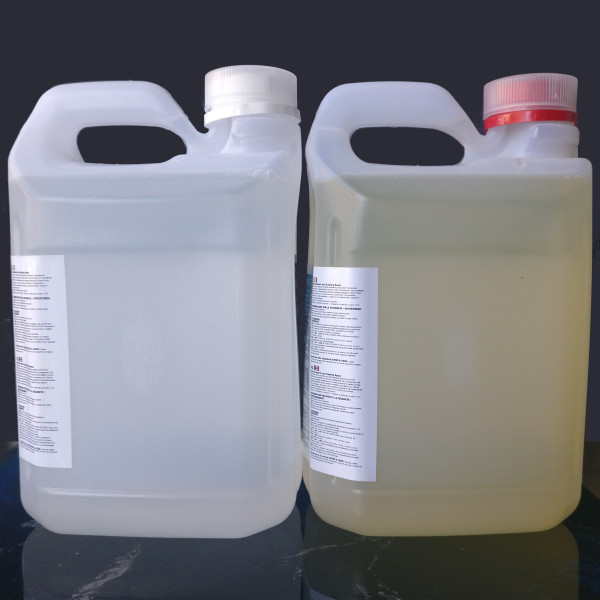
Yellow hardener and clear resin
Epoxy Resin & Hardener

When does the yellowing occur?

There are mainly two types of yellowing of epoxies.

  1. The hardener shows a slight yellow tone even before mixing, and
  2. After the resin mixture has cured/hardened.

:: Yellowing of the hardener

The main cause for yellowing of the hardener (1) is carbonyl formation (carbon and oxygen =C=O) in the epoxy backbone due to thermo-oxidation (3). Amines in the hardener are oxidised (i.e. oxygen added) when air comes in contact with it, either during the bottling process or even when oxygen penetrates the plastic container. Thermo-oxidative aging can be described as a “slow, controlled burning” of the material, thus HEAT (warm environment)+FUEL (the hardener components)+OXYGEN (in air) (5). Take one away, e.g. oxygen, and the process stops.

The yellow colour becomes darker over time, similar to a peeled apple going brown. Even the slight moisture in the air can hasten the process.

→ Can hardener that has yellowed still be used? A definite YES.

This yellowing is not a problem as it does not affect the curing properties of the mixed epoxy resin. Nor does the yellowing continue once mixed. It becomes inert once cured and the hardener no longer reacts with oxygen. The yellowing seen in a hardener bottle looks worse as it is seen in bulk volume, by the time it is mixed it will not look as yellow.

  • When the Hardener is mixed with the Resin, it is diluted, and thus much less yellow in the mixed form.
  • Spread thinly over a colourful painting or art board, any discolouration is hardly, if at all noticeable.
  • When adding colour pigments and pastes to create resin art panels, no discolouration is noticeable.
  • Applying it as a thin layer over wood which generally have a yellow tone, it should not be noticed.


:: Cured epoxy resin yellowing

UV light is the most common cause. The UV light, part of natural light, excites the molecules and cause them to break down. This may even continue after removal from UV exposure (5). Direct sunlight is the biggest culprit in yellowing of cured epoxy resin.

→ Can this yellowing be blocked? To a certain degree.

All epoxy resins will yellow over time, some faster than others. Many epoxy resins used in the industrial and marine industry do not have yellowing blocking agents, as yellowing is not important in their application.
In contrast, art epoxy resins should retain its clarity and special formula epoxy resins contain:

  • UV resistant stabilizer, which combats the effect of UV light exposure on the polymer molecules, reducing yellowing. (Eliminate 300 to 320 nm)
  • Hindered Amine Light Stabilizer (HALS) is a chemical that scavenge free radicals released when UV splits the resin molecules. The free radicals are very reactive and may cause damage to the resin, by effectively binding them, the yellowing is reduced significant.
  • Overcoat UV-resistant clear linear polyurethane coating or high quality one-part polyurethane varnish.

:: Conclusion

Epoxy resin can turn yellow when exposed to humidity, oxygen (the hardener), UV light and high temperatures.

By selecting art resins that have special formulation to prevent yellowing, removing UV light or using colour pigments to mask it, yellowing can be minimised. Understanding these processes a bit better now, will make the next resin project easier.

By Philip Coetzee Ph.D.
July 2021


:: References

1. Krauklis, A.E. and Echtermeyer, A.T. (2018). “Mechanism of Yellowing: Carbonyl Formation during Hygrothermal Aging in a Common Amine Epoxy.” Polymers 10, 1017 (15p).
2. Ginell, W.S. and Coffman, R. (1998). “Epoxy resin-consolidated stone: Appearance change on aging.” Stud. Conserv. 43, 242–248.
3. Ernault, E., Richaud, E., and Fayolle, B. (2016). “Thermal oxidation of epoxies: Influence of diamine hardener.” Polym. Degrad. Stab.134, 76-86.
4. Dijkstra, K. (2018). The Bright Science Behind Thermo-Oxidative Stability. (2021,July14). https://www.dsm.com/content/dam/dsm/engineering-materials/en/documents/DSM_Thermo-oxidative_Stability_Paper.pdf
5. Arnold, J. (2021, July 14). This Is Why Epoxy Turns Yellow. https://woodepoxyworld.com/this-is-why-epoxy-turns-yellow/

Filed Under: Tips & Articles

Trouble with Bubbles?

June 23, 2021 by webbuilderram

Bubbles be gone!

Apply all or use only the tips that are practical and make sense to you.

  1. Cold Temperature is one of the main causes. Resin loves warmth. Ideal room temperature 24-30oC.
    If too cold the resin becomes thick and with mixing may even look milky with all the bubbles when really cold. Cold resin will result in thick pours.Suggestion: Warm resin & hardener before mixing. You can put in a warm water bath (tap water – i.e. baby bath temp, so 30-40oC max). One can put the bottles in a plastic bag and then into a bath to avoid water accidentally getting into the bottles or labels coming off. Or pour in separate cups and put in shallow water bath. DO NOT GET WATER IN THE RESIN MIX
    IMPORTANT: Warming the resin means the working time is reduced and the warmer the resin the sooner it will set.
    One can use a heat pad to put under container, that also works.
  2. Pour resin together on the side of the containers, rather than in the centre. Sometimes difficult but it does eliminate some bubbles.
  3. Deeper containers are better than a shallow one with big base, as more air is introduced when stirring and scraping off the bottom in a shallow container.
  4. Stir gently, but thoroughly, scraping the sides and bottom, making sure all is mixed. Usually 3-5 min – can let it stand for a minute or two. Do not whisk it up like and egg. Also keeping spatula/stirring stick to the bottom instead of lifting it out, it stops more air being introduced.
  5. Use a flat wide spatula or stirring stick rather than a thin one, as it generates fewer bubbles. Apparently silicone/plastic sticks produce fewer bubbles as microbubbles may escape from the wood (personally not noticed).
  6. When pouring mixed resin into mould, pour on the side and as close to the surface of the flowing resin as possible.
  7. Bubbles in resinSome folk like to twirl the mould a bit so it flows over the sides, so bubbles don’t attach to the sides.
    There are some that powder the sides of the mould with baby-powder to stop bubbles attaching to the sides (never tried, should be OK with coloured resin, even powdering with pigments, but question the practice with clear resin)
  8. If the stirring stick is left in the container for a minute or two, the bubbles tend to move to the stick and if then removed, lots may be removed from the mixing container.
  9. Slight flaming of mixing container may help pop surface bubbles.
  10. When embedding any organic object, e.g. flowers in resin, the object should be sealed first, as micro trapped bubbles can flow from the object into the resin (some use craft sealer sprays or even hairspray). This is especially true of natural dry wood, shells, flowers. MDS seems to be bubble free as compressed during production.
    One can even try immersing the item in resin before adding to the mould. A bit tricky when doing multiple layers.
  11. Pop big bubbles with toothpick or stirrer, if at the side, gently scrape away as they surface (they are more likely to surface if the resin is warmer and room is warm)
  12. You can gently flame the surface – can be tricky is using silicone mould as overheated resin from the flames my bond more to the silicone or silicone can melt. Heat gun or embossing tool is often used.
    Give resin time to settle and allow bubble to rise to the top – stop fiddling!
  13. For moulds, one can even warm the mould before doing the pour.
  14. Pour in layers, thin layers, as it is easier for microbubbles to come to the surface.
  15. Some folks put any type of vibrating tool on the table next to the mould e.g. electric massager, electric sander, electric drill – the fine vibrations on the table apparently helps to release bubbles, letting them float to the top.

Filed Under: Tips & Articles

Eli-Chem Resins are going green

February 27, 2021 by webbuilderram


Eli Chem carbon neutral

We are on a mission

As Eli-Chem Resins continues to grow, we have an increasing responsibility to commit additional resources in order to maximize the positive impact of our products.  Today, we’re becoming one of the few ecommerce brands that offset 100% of our carbon emissions generated by getting your orders to your doorstep! All of our orders will now be shipped 100% carbon neutral, so you’ll have confidence that when an Eli-Chem package arrives at your door, you’ll get something you love, and you’ll be proud of the fact that you’re taking a small step towards making a big change in the world/actively reducing your carbon footprint.

What does it mean to offset emissions?

Virtually everything we do as humans releases planet warming carbon into the atmosphere which contributes to climate change. All businesses produce carbon too, through sourcing products, manufacture and delivery.

For any carbon emissions released into our atmosphere as a result of getting you your items from us, we invest in projects that reduce carbon emissions by the same amount with help from EcoCart. It’s almost like we’re giving the planet an IOU, then immediately paying it back.


How does it work?

Eli Chem carbon neutralEach time one of our lovely customers buys one of our products, we will automatically purchase verified emissions reductions, more commonly known as “offsets” through our friends at EcoCart. These purchases support environmental projects, like wind and solar farms that create clean energy, or protecting trees that would otherwise be cut down so that they can continue to absorb carbon from the air. These projects protect animals and support deserving communities. When we say we will be carbon neutral, that means that we will offset all of the carbon emissions we create from shipping our products to your door.

blah di blah

What we are doing at Eli-Chem Resins

For every one of our amazing items that ships, we now balance it with a positive environmental impact thanks to our partner, EcoCart. The full environmental impact of getting your favourite resin products to your door is completely neutralized. There will be no additional cost to our customers, it simply gives you the satisfaction of knowing that shopping with us means we are making a positive impact on the planet….together.

  • All our orders are shipped carbon neutral. No matter where in the world we ship, we offset our carbon by contributing to projects which meet the United Nation’s Sustainability Development Goals and are proven to reduce the amount of greenhouse gases entering the atmosphere. So when you order through us, you’ll get something you love, and you’ll be part of making a big change in the world.
  • All our cardboard outer packaging comes from a FSC® certified manufacturer.
  • Better pack design reduces damages. Each time damaged goods are replaced the carbon cost of a transaction doubles.
  • All of our resin containers are made from recycled plastic and can be recycled again, by you.
  • If we receive cardboard packaging from other suppliers we will try to re-use it and if we can’t, we recycle it.
  • We only use compostable packing fillers so use them on your compost bin, or let your youngsters conduct science experiments with them!
  • The plastic air sacs we use to protect some of our glass containers are made from recycled PET.
  • Our lighting in our warehouse and offices is operated by motion sensors so we are not wasting valuable energy when we don’t need it.
  • In our offices we recycle everything that we can and are working towards being paperless.

What you can do

  • Take your empty resin bottles to a recycling centre, most councils will recycle HDPE plastics so please don’t put them in landfill waste.
  • Re-use or recycle our cardboard outer packaging, it is a tough double wall construction so its great for storage at home.
  • Compost our white biofil packing peanuts, they are made from potato starch and break down in no time. Please don’t put them in landfill waste.
  • Buy from brands with similar values, whether it’s with carbon neutral products, a sustainable supply chain, recycled materials, or eco-friendly packaging. We should all do our best to limit the carbon footprint of the products we buy.

Why is this so important?

Online shopping has transformed retail. Unfortunately, it’s also impacting the environment, and not for the better. Eli-Chem Resins has always been conscious of our impact and actively worked to lighten our carbon footprint. We believe that if we all work together towards positive change, we can make the world a cleaner, healthier place. We are committed to reducing our impact on the environment for the good for the planet.

Who will pay for this?

Eli Chem carbon neutralEli-Chem are picking up the tab on this one! It’s simply another reason for you to shop with us. Being human means releasing planet-warming carbon emissions into the atmosphere. It happens when we take a shower, charge our phones, or let out a yawn after a long day. Just like humans’ release carbon pollution, so do businesses and Eli-Chem is no exception. As a manufacturer of a plastic product, we believe it is our duty to reduce our impact on the environment.

The only way we can truly begin to reverse the effects of climate change is if everyone does their part. By changing our daily habits, making sustainable swaps and support companies that care about their impact on the earth, we can make a real change in the world.

Copyright and original text Eli-Chem

Filed Under: Tips & Articles

Primary Sidebar

  • facebook
  • instagram

Search Products [Name or SKU]

Filter by Category

  • Acrylic Inks / Tints
  • Acrylic Resin (Water-based )
  • Art Boards
  • Colour Kits
  • Crackle Paste
  • Dispersion Media resi-BLAST
  • Fluro Colours
  • Gift Card
  • Glitters
  • Miscellaneous
  • Moulds & Tools
  • Pigment Pastes (all)
  • Pigment Powders (all)
  • Resin
  • Resin Tints
  • Wood Treatment
  • Workshops

Filter by Basic Colour

(click to select / unselect)

No products were found matching your selection.

Cart

Visa | Master Card acceptableWindcave secure payment gateway

Prices in NZD

Footer

Find Us

Resin and More
Browns Bay, Auckland
New Zealand
Email: info@resinandmore.co.nz

Explore Menu

Home
Which Resin?
Safety (MDS)
Privacy Policy
Customer Care
Resin Calculator
  • facebook
  • instagram

Credit Cards Accepted

Visa | Master Card acceptable

Prices (NZD) include GST

Copyright © 2026 · Resin and more · Website by Webbuilder Ltd | Large Resin Art images by Jennifer Cruden